


Views: 0 Author: Site Editor Publish Time: 2025-05-24 Origin: Site


Transformers are essential components in electrical systems that enable the efficient transfer of energy between circuits by stepping up or stepping down voltage levels. At the heart of every transformer lie two critical components—the transformer core and transformer coils. These components work together to ensure the efficient conversion and transfer of electrical energy, and their design, materials, and construction play a significant role in the transformer's overall efficiency and performance. In this comprehensive guide, we will explore the function, types, and materials of transformer cores and coils, focusing specifically on the Dry Type Transformer Core and its benefits.
A transformer core is the central magnetic component that enables energy transfer between the primary and secondary windings of a transformer. The core provides a low-resistance path for the magnetic flux generated by the primary winding, which induces an electromotive force (EMF) in the secondary winding. This process is vital for voltage transformation, as the core facilitates the transfer of electrical energy from one coil to another.
The Dry Type Transformer Core is a specific type of core used in transformers that do not require oil-based cooling. This type of core is especially common in applications where fire safety and environmental concerns are paramount. The core’s design and material directly influence the transformer’s efficiency and overall performance.
Transformers also rely on coils, which are responsible for generating the magnetic fields necessary for voltage transformation. These coils are made of conductive materials, typically copper or aluminum, and are wound around the transformer core. There are two types of coils in a transformer:
Primary Coils: These coils receive energy from the input circuit and generate a magnetic field.
Secondary Coils: These coils receive the induced magnetic field and convert it back into electrical energy, typically at a different voltage level.
The design and material of transformer coils, especially in conjunction with the core, play an important role in determining the efficiency of the energy conversion process.
The Dry Type Transformer Core is the key medium through which energy is transferred in a transformer. It allows the alternating magnetic field generated by the primary coil to link the primary and secondary coils, enabling the energy to be transferred without significant loss. The core essentially guides the magnetic flux to ensure efficient energy conversion.
The coils work in tandem with the core to facilitate this energy conversion. The primary coil generates the magnetic field, while the secondary coil receives the field and converts it into electrical energy at the desired voltage. The core’s ability to effectively conduct magnetic flux ensures that the transformer operates efficiently.
The transformer core provides a low-reluctance path for the magnetic flux, which is vital for efficient energy transfer. The material of the core, such as silicon steel or amorphous metals, plays a key role in maximizing the magnetic permeability of the core. Higher permeability ensures that the magnetic flux can be conducted with minimal resistance, improving the transformer's performance.
For Dry Type Transformer Cores, the design is crucial in minimizing energy losses, such as those caused by eddy currents or hysteresis, which are two key factors that affect transformer efficiency.
The shell-type core is one of the most common core designs, featuring a rectangular cross-section with yokes that help reduce additional losses caused by leakage flux. This design surrounds the winding like a shell, providing mechanical strength and minimizing energy loss. The core’s structure is ideal for Dry Type Transformer Cores, as it offers high power handling capacity and reduces leakage flux.
Advantages of Shell-Type Core:
Provides better mechanical strength and structural integrity.
Reduced leakage flux, improving efficiency.
Fewer lamination specifications make it easier to secure.
The core-type core has a stepped cylindrical cross-section, with the windings surrounding the core limbs. This design allows for easier insulation management between the windings and the core, as well as better short-circuit stability. The Dry Type Transformer Core in this configuration is widely used in many modern transformers, especially in high-voltage applications.
Advantages of Core-Type Core:
Easier insulation management.
Better short-circuit stability.
Multiple lamination specifications for flexible design.
Laminated transformer cores are made from thin sheets of high-quality magnetic materials, such as silicon steel, which are stacked and insulated from each other. The primary benefit of this design is the reduction of eddy current losses, which are a major source of energy waste in transformers. Laminated cores are used extensively in Dry Type Transformer Cores for their efficiency and ability to manage heat.
Benefits of Laminated Cores:
Reduces eddy current losses.
Improves efficiency and reduces heat generation.
Enhances magnetic permeability, resulting in better energy transfer.
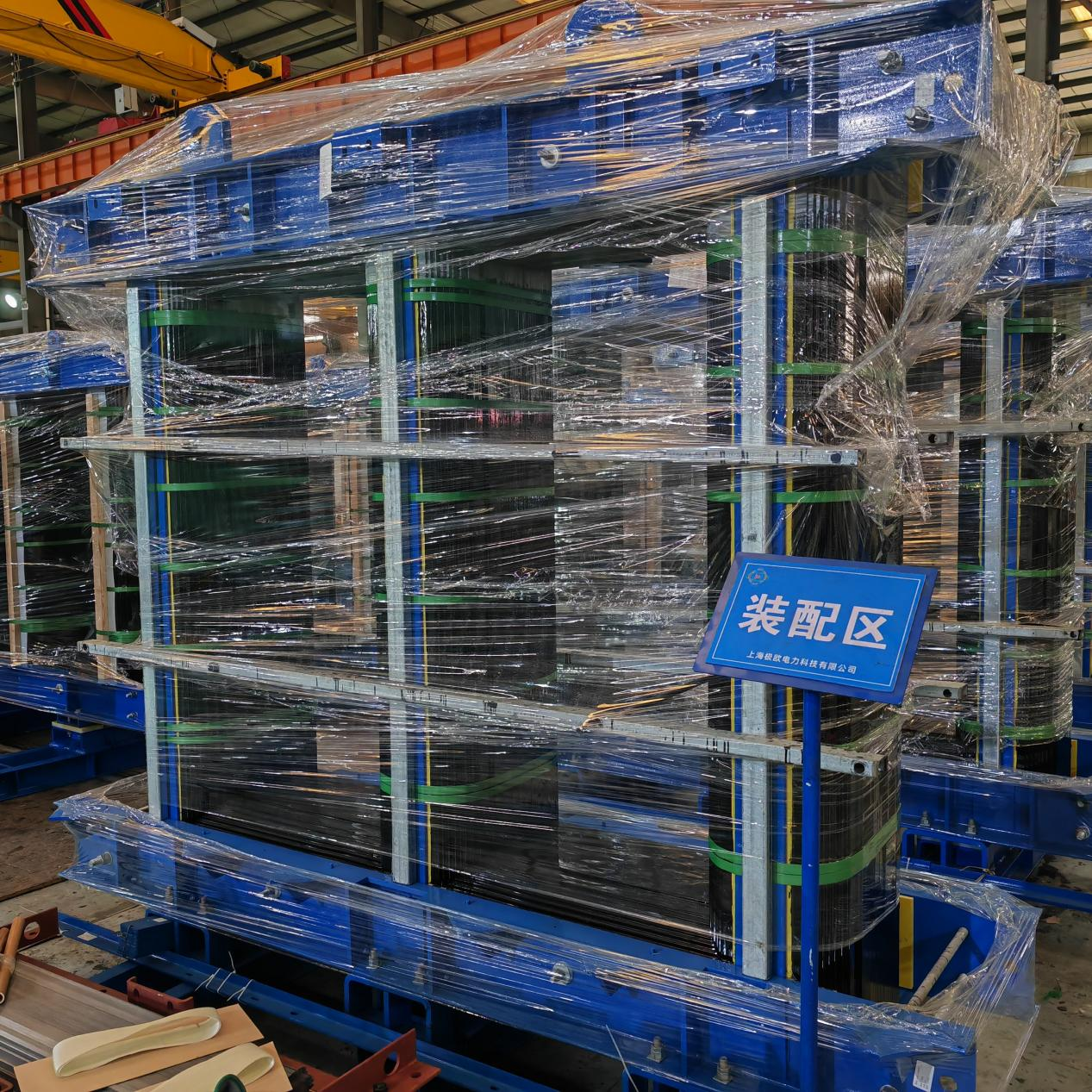
Silicon Steel: The most common material used for transformer cores, silicon steel offers high magnetic permeability and low energy loss. Grain-oriented silicon steel is often used in Dry Type Transformer Cores due to its superior magnetic properties and ability to reduce losses.
Amorphous Metals: These materials have a non-crystalline structure, which reduces energy loss during magnetization. Amorphous metals are ideal for renewable energy applications like solar and wind power because they offer high efficiency and lower operational costs.
Nanocrystalline Materials: These materials have extremely high permeability and low core losses, making them suitable for high-frequency applications such as data centers and energy storage systems.
Copper: Copper is the preferred material for transformer coils due to its excellent electrical conductivity. It allows for minimal resistance and energy loss, which is essential for high-efficiency transformers, particularly in Dry Type Transformer Cores.
Aluminum: While less conductive than copper, aluminum is a cheaper and lighter alternative. It is commonly used in standard distribution transformers, where cost efficiency is a priority.
Transformer cores are designed to minimize energy loss, specifically through hysteresis and eddy currents. High-quality materials, such as grain-oriented silicon steel, are used to reduce hysteresis losses, which occur when the magnetic field in the core is constantly reversed by the alternating current. Laminated cores help mitigate eddy current losses by providing insulated layers between the sheets of material, preventing the formation of circulating currents.
For Dry Type Transformer Cores, the laminated design helps to ensure that energy is transferred efficiently without significant heat generation, which is crucial for the transformer’s longevity and performance.
The efficiency of a transformer’s energy transfer is largely dependent on the core’s magnetic properties. By using materials like amorphous metals or nanocrystalline alloys, transformer cores can achieve high magnetic permeability, which allows for better coupling between the primary and secondary windings. This results in less leakage flux and more efficient energy transfer.
In Dry Type Transformer Cores, the ability to maintain high magnetic efficiency is particularly important because these transformers often do not rely on oil-based cooling systems. The better the core's ability to guide magnetic flux, the more efficient the transformer will be.
While Dry Type Transformer Cores do not rely on oil-based cooling, thermal management is still critical. Laminated cores help reduce heat generation by improving efficiency and minimizing losses. The increased surface area from laminating the core also aids in natural heat dissipation.
In larger transformers, cooling methods such as forced air or natural convection are employed to maintain optimal operating temperatures. Proper cooling ensures that the transformer operates efficiently without overheating, which could damage the core and reduce its lifespan.
Transformer cores and coils are used in power and distribution transformers to manage voltage levels in electrical grids. Dry Type Transformer Cores are ideal for these applications because they are safe, efficient, and compact, making them suitable for both indoor and outdoor installations.
In renewable energy systems like wind and solar, Dry Type Transformer Cores with laminated cores are used to step up or step down voltage for optimal energy distribution. The efficiency of these transformers helps reduce energy waste, which is crucial in systems that rely on renewable power sources.
New materials, such as nanocrystalline alloys and superconducting materials, are being developed to further reduce energy loss and improve transformer performance. While superconducting materials are not yet cost-effective for widespread use, they hold the potential to eliminate energy loss entirely in the future.
As manufacturing techniques continue to evolve, transformer cores and coils will become even more efficient. Innovations such as precision coil winding and optimized core shapes will allow for more energy-efficient and cost-effective transformers, especially in Dry Type Transformer Cores, which are increasingly used in modern electrical systems.
Transformer cores and coils are integral to the efficient operation of electrical transformers, enabling the transformation of voltage and the reliable transfer of energy. The design and material choices of these components, especially in Dry Type Transformer Cores, have a significant impact on performance, efficiency, and safety. By reducing energy losses, improving magnetic efficiency, and enhancing thermal management, laminated transformer cores and high-quality coils help ensure that transformers operate at their best.
At Shanghai Jisco, we specialize in providing high-quality transformer cores and coils, including Dry Type Transformer Cores, that meet the latest industry standards for efficiency, safety, and performance. Our products are designed to maximize energy efficiency and reliability, ensuring the best possible transformer performance for our clients. For more information or to consult with our experts, contact Shanghai Jisco today.


